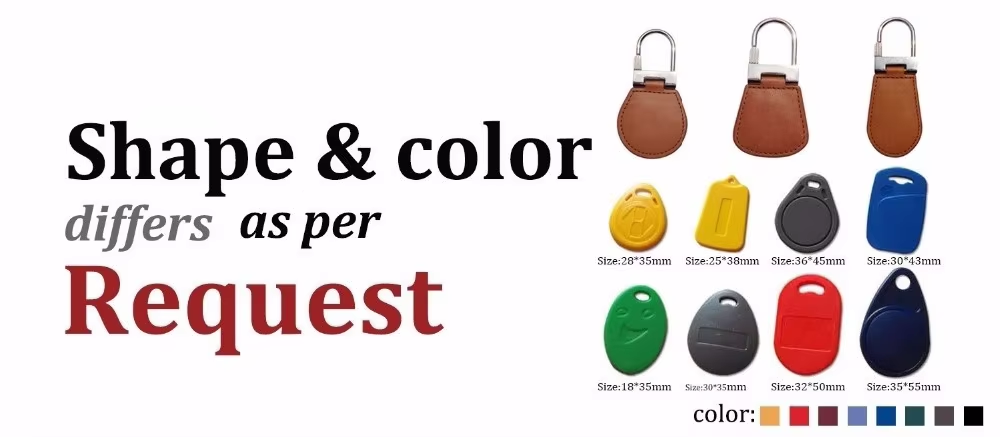
Where to Buy High-Quality NFC Key Tags?
Discover high-quality NFC key tags for secure access control. Learn about their benefits, applications, and why you should choose our top-rated factory!
Like most agricultural product supply chains, the vegetable supply chain also includes production, processing, storage, transportation, and sales. By using UHF RFID Labels, the public database of each link in the entire supply chain can be easily read, and each link can also easily update the data of the corresponding stage. Consumers and relevant departments can also query and track through network communication and terminals, allowing people to build a bridge of mutual trust with food safety.
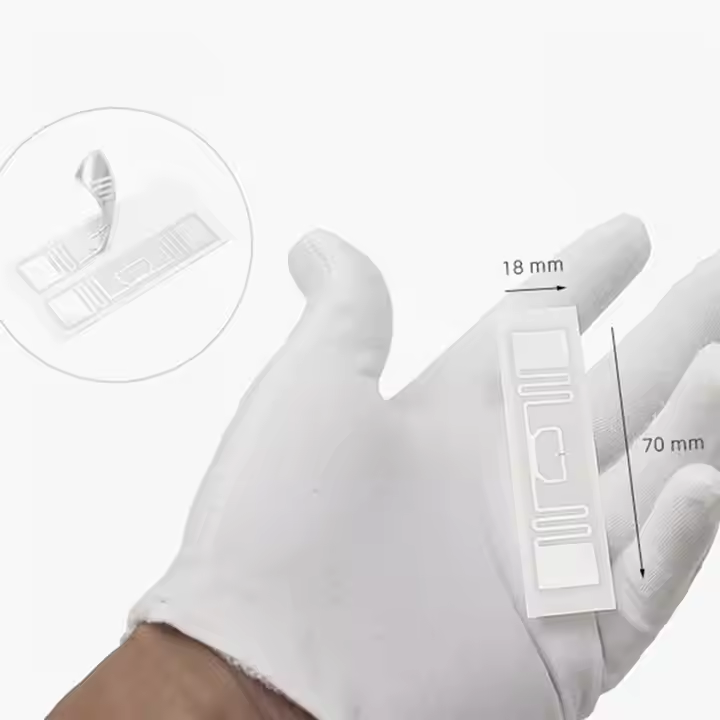
Each UHF RFID Labels has a unique code, just like the “ID card” of vegetables. From the beginning of planting, the label records the type of vegetables, growth cycle, fertilizer and pesticide use, picking time, and other detailed information. This data can be continuously updated through processing, transportation, and retail stages.
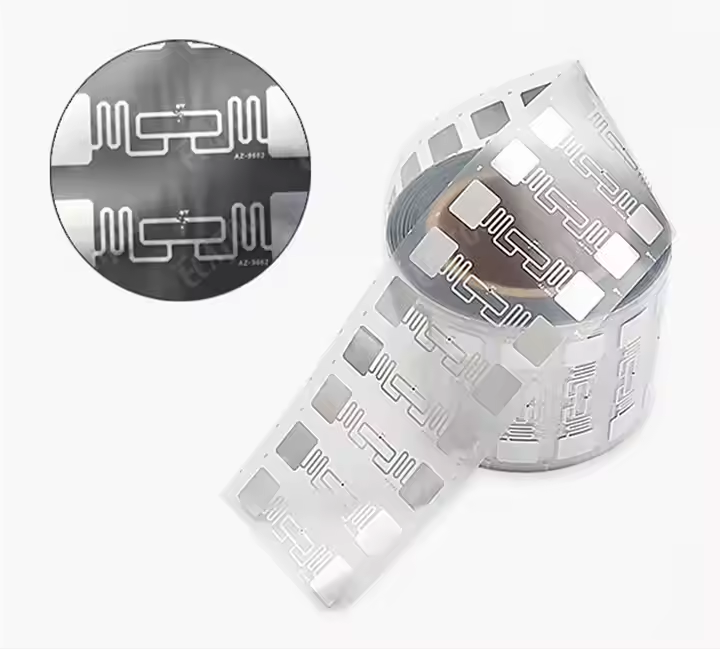
The life cycle of vegetables is short, and the requirements for the environment and timing are extremely high. UHF RFID technology enables precise management of each link through automatic identification, data recording, and uploading:
| Link | RFID Application |
|---|---|
| Planting | Land marking, growth information recording |
| Processing | Record processing companies, methods, additives, etc. |
| Warehousing | Auto-read packaging specs and weights, shelf placement |
| Transportation | Combined with GPS for real-time tracking |
| Retail | Anti-theft monitoring, shelf life alerts, expiry warnings |
For example: in the warehousing link, the RFID system can automatically record the time, location, and environmental requirements (temperature, humidity) when vegetables enter storage. It also enables fast batch identification during inventory, reducing manual error rates.
In import and export stages, inspectors only need to scan the label using a handheld RFID reader to quickly understand the detailed content of the packaged vegetables without unsealing them. This greatly improves inspection speed and reduces the risk of product damage.
In retail stores or supermarkets, UHF RFID Labels help merchants monitor vegetable inventory and shelf life in real time. Expiry alerts are automated to reduce waste.
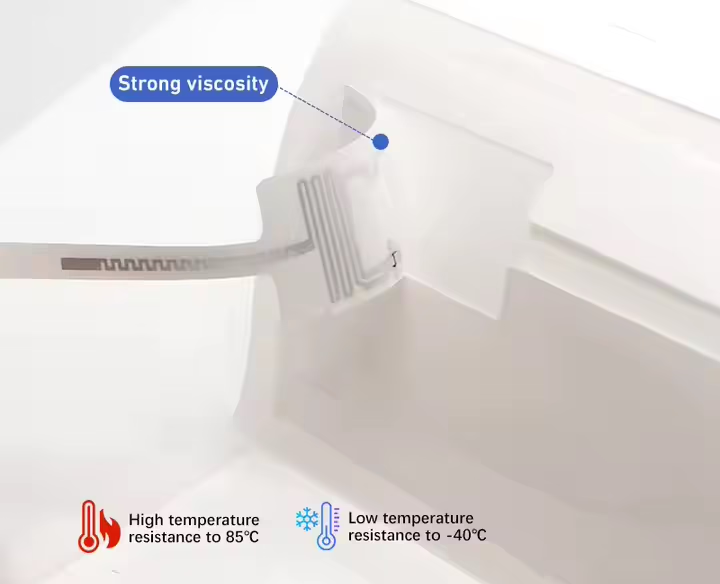
UHF RFID Labels are not only suitable for vegetable supply chains but are also widely used in asset management, drug inventory, library systems, apparel anti-theft, smart retail, and more.
| Project | Parameter |
|---|---|
| Frequency Range | 860–960MHz |
| Protocol Standard | ISO/IEC 18000-6C (EPC Class1 Gen2) |
| Size | Conventional 30×15mm, customizable |
| Material | PET, PVC, coated paper, thermal paper, synthetic paper |
| Process Options | Inkjet, hot stamping, UV, QR code, barcode, frosting |
| Customizable Content | LOGO, corporate info, batch number, anti-fake code |
Behind each small UHF RFID Label lies an entire safe and controllable vegetable supply chain. It not only protects consumers’ “vegetable baskets” but also helps green living reach thousands of households.
If you are also concerned about food safety and efficient supply chain management, consider introducing UHF RFID Labels solutions to jointly create a healthier, smarter future.
📩 Please contact us for free samples or customized vegetable supply chain RFID solutions.


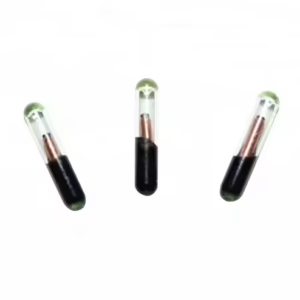
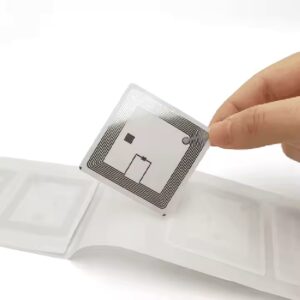
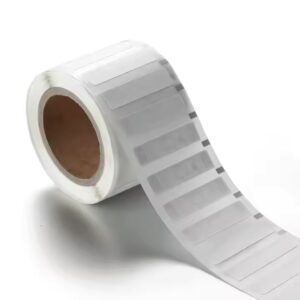
Newest trends and common knowledge in RFID laundry tags.
Discover high-quality NFC key tags for secure access control. Learn about their benefits, applications, and why you should choose our top-rated factory!
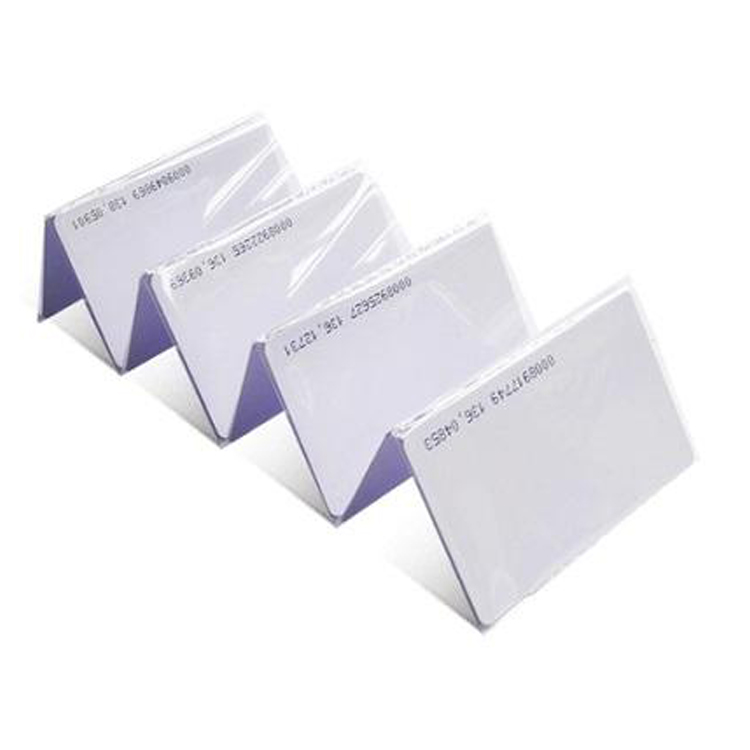
EM4305 RFID Cards: Secure, Durable & Rewritable for Access Control, Events, and Membership Management.
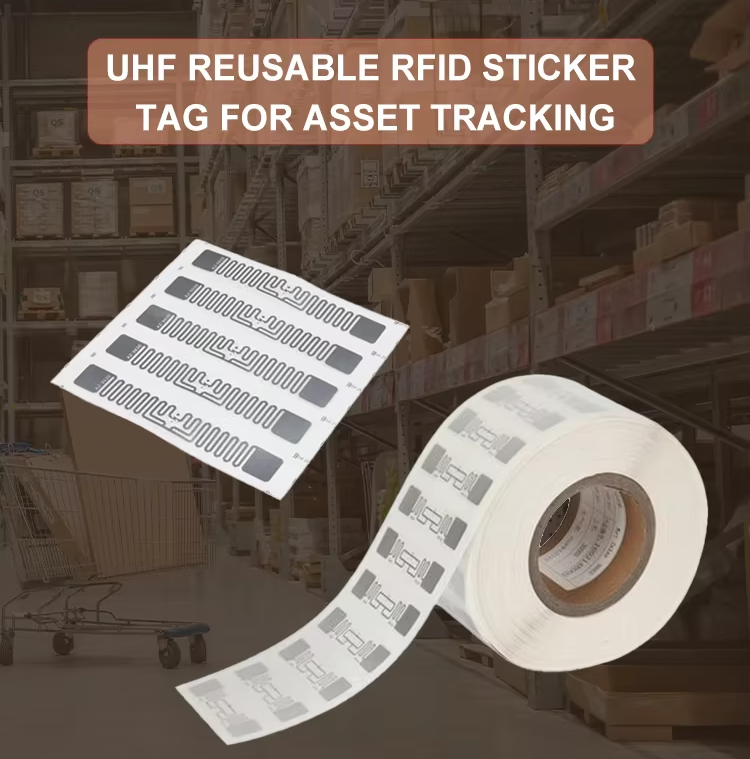
Improve logistics efficiency with RFID UHF labels, enabling smart warehousing and real-time data management across all processes from inbound to outbound.
Didn’t find what you want? Ask our manager for help!