Unpacking RFID Tags: Which One Is Right for You?
A quick guide to choosing the right RFID tags by frequency, type, capacity, and application—find the best fit for your business needs.
For those who are new to smart cards, it is easy to get confused by the various terms on the market. What is an ID card? What are IC cards, RFID cards, NFC cards, and MIFARE cards? What is the relationship between them? Don’t worry, this article will help you sort it out.
| Nombre | Writable | Encrypted | Use Frequency | RFID | Common Uses |
|---|---|---|---|---|---|
| ID Card | No | No | 125KHz (Low Frequency) | Sí | Access Control, Attendance |
| IC Card | Sí | Sí | 13.56MHz (High Frequency) | Sí | Bus Card, Membership Card |
| RFID Card | Alguno | Depends on the Chip | Multiple Frequency | Body | Asset Tracking, Logistics Mgmt |
| NFC Card | Sí | Sí | 13,56MHz | Sí | Mobile Payment, Access Control |
| MIFARE Card | Sí | Sí | 13,56MHz | Sí | Access Control, Campus Card |
ID Card: Can only read fixed card number, cannot write content, has no encryption function, and is easy to be copied.
IC Card: Supports data reading and writing, requires password verification before data transmission, and has high security. Different permissions can be set for each storage area, suitable for hierarchical management.
So to put it simply:
ID card is “read-only”, while IC card is “readable and writable”.
IC card is a general term, including contact and contactless. Contact cards are common in bank cards, and contactless cards are common in access control cards and bus cards.
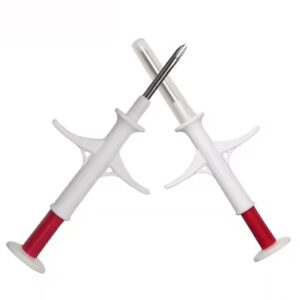
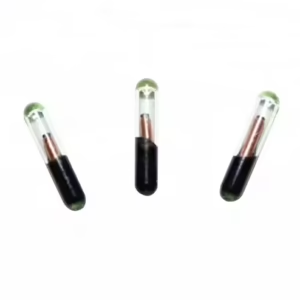
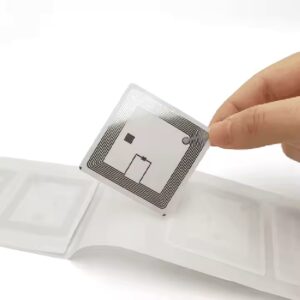
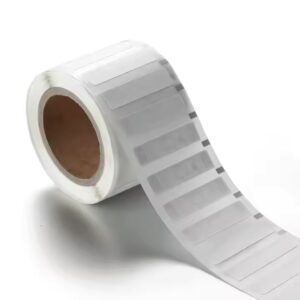
RFID card is a general term for contactless electronic cards, including ID card, IC card, NFC card, etc., mainly classified according to frequency band, such as:
Low frequency: 125KHz, such as ID card
High frequency: 13.56MHz, such as MIFARE card, NFC card
Ultra-high frequency: 860~960MHz, such as logistics tracking tags
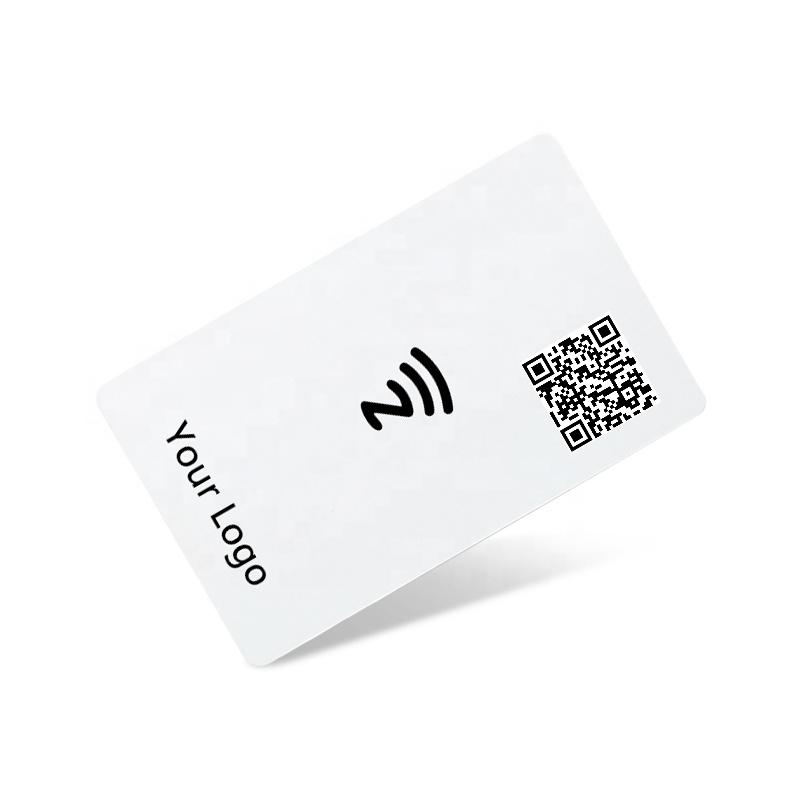
NFC is an upgraded version of RFID, and it is also a contactless communication technology in the 13.56MHz frequency band.
But the differences are as follows:
| Difference | RFID | NFC |
|---|---|---|
| Communication | Master-slave (reader reads tag) | Point-to-point (devices can read and write) |
| Used Frequency Band | Low/High/Ultra-high frequency | Only 13.56MHz |
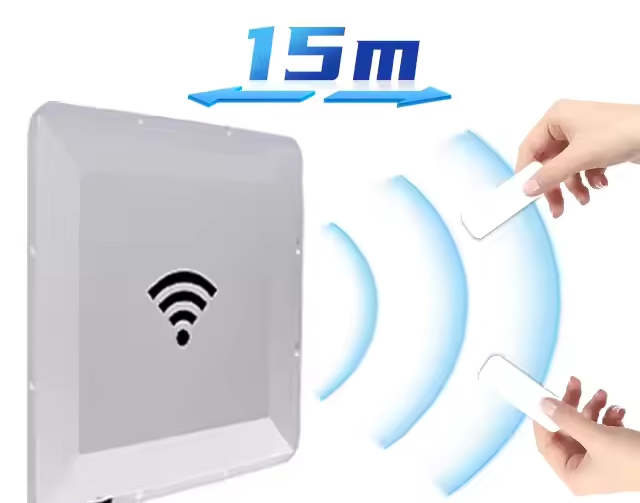
| Distance | Up to tens of meters | Within 10cm, high security |
| Common Uses | Warehousing, logistics, tracking | Mobile payment, access control, NFC cards |
So, NFC card can be understood as “smarter RFID card”, it can not only be read, but also interact with other devices, such as mobile phone one-touch payment, one-touch adding friends, etc.
MIFARE is a series of high-frequency (13.56MHz) RFID chips launched by NXP, which are widely used in campus cards, access control cards, membership cards and other fields. Common types are as follows:
| Tipo | Alias | Encriptación | Capacidad | Protocolo |
|---|---|---|---|---|
| MIFARE Ultraligero | MF0 | No | 512 bits / 64 bytes | ISO 14443A |
| MIFARE S50 | MF1 S50 | Sí | 1K bytes | ISO 14443A |
| MIFARE S70 | MF1 S70 | Sí | 4K bytes | ISO 14443A |
| DesFire MIFARE | MF3 | Sí | Up to 8K bytes | ISO 14443A |
| MIFARE Pro | MF2 | Sí | Security chip type | ISO 14443A |
The main difference lies in capacity and structure:
S50: 1KB data, 16 sectors in total, 4 blocks per sector, 16 bytes per block
S70: 4KB data, the first 32 sectors have the same structure as S50, and the last 8 sectors have 16 blocks each, a total of 256 blocks, with a larger capacity
 Application Scenario Examples
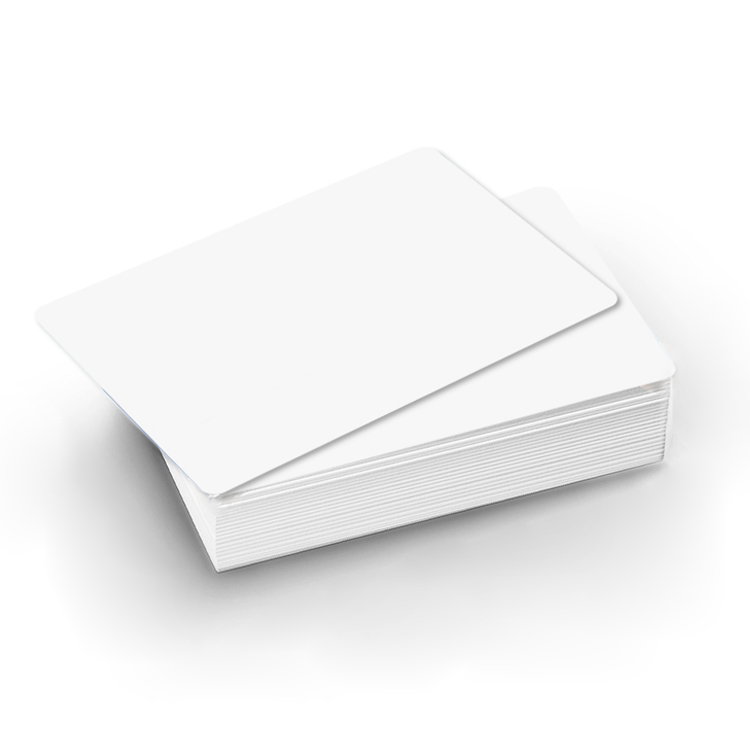
MIFARE Cards are commonly used for their high security and large capacity, including:
Campus card
Subway/bus card
Hotel room card
Membership card / Points card
Access control system
Social media business card (e.g., customizable electronic business card with NFC)
PVC / PETG / PLA environmentally friendly materials
Customized printing, hot stamping, QR code, laser coding
13.56MHz standard frequency
Optional chip: MIFARE S50, S70, Ultralight, NTAG213, etc.
Service life up to 100,000 read and write times
In general, just remember:
ID card is the most basic, only reads the number
IC card has more powerful functions, can write data, and supports encryption
RFID card is a large category, NFC is its upgraded version
MIFARE card is a mainstream product with wide application and strong compatibility among RFID cards
Next time when choosing a card, you may wish to choose the right card type according to the actual application needs. Security, capacity, read and write distance, cost — everything is important!
If you need to understand or customize high-quality MIFARE Cards, you can contact us for free samples and customized solutions. We support full-color printing, chip encoding, laser engraving, barcode/QR code and other processes to adapt to the use needs of various industries.
Últimas tendencias y conocimiento común en etiquetas de lavandería RFID.
A quick guide to choosing the right RFID tags by frequency, type, capacity, and application—find the best fit for your business needs.
Vanishing cruise linens? Stadium uniforms lost mid-game? UHF RFID Laundry Textile Labels track textiles, slash losses across hospitality/events.
Learn when to use F08 NFC Tags for secure asset management, IoT, and cashless systems. Compare NFC vs. RFID/QR codes and optimize your operations.
¿No encontraste lo que buscabas? ¡Pide ayuda a nuestro gerente!